10 Ways to Bypass WAF
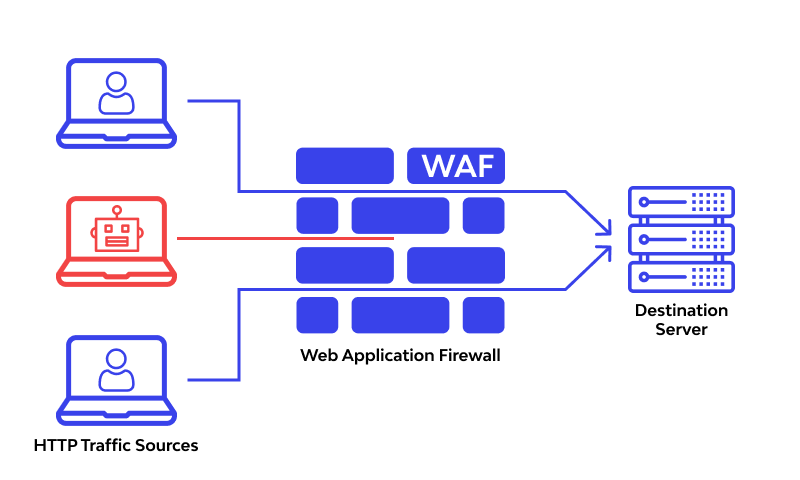
10 Ways to Bypass WAF
1. Payload Encoding and Obfuscation
Common encoding techniques are:
- Hex encoding : char —> hex equivalent
- Base64 encoding : entire payload —> base64 string
- URL encoding : certain char —> %xx format (xx = hex format)
Example:
1
SELECT * FROM users WHERE id = 1;
Encoding payload in hexdecimal:
1
%53%45%4C%45%43%54%20%2A%20%46%52%4F%4D%20%75%73%65%72%73%20%57%48%45%52%45%20%69%64%20%3D%201;
Server may process valid SQL but sometimes WAF doesn’t decode payload correctly.
2. HTTP Parameter Pollution
It involves sending multiple parameters with the same name in a single request.
Many WAF expect only 1 occurence of each parameter, so 2nd or subsequent parameter may be ignored. And attacker can exploit this by inserting malicious values in additional parameters
Example:
1
GET /login?username=admin&password=admin123&password=mailicious_payload
WAF only inspect one parameter still server can process 2nd and subsequent parameter.
3. Case Tranformation
Change case of payload so that WAF unable to recognize anomaly.
Example:
1
SELECT * FROM users WHERE username = 'admin';
Attacker send this:
1
SeLeCt * FrOm users WhErE username = 'admin';
4. IP Fragmentation
how data transmitted over networks
Break payload into smaller fragment, so that smaller fragment bypass WAF and then resemble at server side for attack.
Example:
Instead of send complete HTTP request
send multiple IP packets
1
2
GET /fragments/part1
GET /fragments/part2
5. JSON & XML Payloads
Modern web app use SOAP or REST API to transmit data in JSON or XML format.
Many WAF not fully inspect content of XML or JSON
Example:
1
2
3
4
{
	"username" : "admin",
	"password" : "<script>alert('XSS')</script>"
}
6. Session Awareness Bypassing
Some WAFs are stateless and treat each request independently.
Attacker can bypass this by sending multiple request by sending normal look payload first then malicious one.
Example:
- Request 1: GET /login
- Request 2: POST /login (valid credentials)
- Request 3: POST /profile?id=1’; DROP TABLE users;–
7. 404 bypassing
Target non existing page which has less security check by WAF
Example:
1
GET /nonexistentpage?payload=<script>alert('XSS')</script>
8. DNS Based Attacks
Many WAF is domain specific that is they analyze traffic from specific domain.
Attacker can directly send requests directly to server by avoid WAF’s domain-based filter.
Example:
1
GET <http://example.com/login>
Instead of this attacker can send:
1
GET <http://192.168.1.1/login>
9. Rate Limiting Bypass
Example:
Instead of sending burst amount of request, attacker can spread their request across botnets of hundreds of IP address which can bypass rate-limiting rules.
10. Exploiting Zero-Day Vulnerabilities
Zero-day vulnerabilites is unpatched flaw in software that is unknown to the vendor at the time of attack.
As WAF rely on predefined rules or pattern, it may not identify or block zero-day exploits.
New Concept:
CDN stands for Content Delivery Network
It is a geographically distributed group of servers that caches content close to end users